
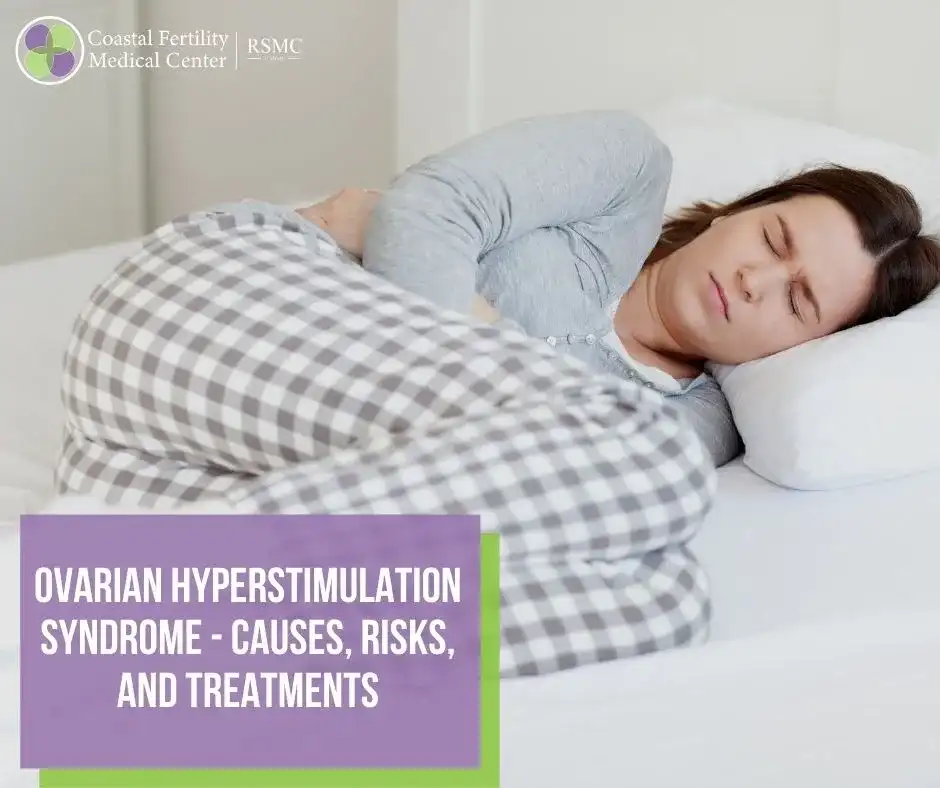
The journey to parenthood can be a bumpy one full of ups and downs. Even though advanced reproductive technologies such as IVF have opened new doors for many infertile couples, it is still a medical procedure that may have unwanted side effects. One such risk of IVF is the Ovarian Hyperstimulation Syndrome or OHSS.
According to a Pew Research study, 33% of adults in the US have undergone fertility treatments themselves or know a person who did. Fortunately, less than 3% of couples pursuing fertility treatments end up using advanced assisted reproductive technologies, such as IVF (in vitro fertilization), to get pregnant.
IVF involves the stimulation of a woman’s ovaries to produce many eggs, which are later harvested and fertilized in a fertility laboratory. Next, the resultant embryos are introduced back into the womb with the hope of achieving a pregnancy. In vitro fertilization (IVF) uses various medications or hormones which are taken at different points in the cycle.
These hormones and medications can lead to complications like ovarian stimulation syndrome (OHSS). OHSS occurs when the ovaries get enlarged with fluid that leaks into the belly. It usually results from the medications administered during IVF and other procedures that boost the production and maturation of eggs.
How common is ovarian hyperstimulation syndrome (OHSS)?
In the past, approximately 10% of women who had undergone IVF treatments developed OHSS, but now, less than 5% have the condition. Severe OHSS occurs in less than 1% of women undergoing hormonal fertility treatments.
Causes
Ovarian hyperstimulation syndrome (OHSS) is an “iatrogenic” complication. This means that it is usually due to hormone therapy during fertility treatments. While mild cases of OHSS occur in one-third of IVF cycles, moderate to severe cases of the condition happen in just 3 to 8% of all treatment cycles.
Typically, a woman undergoing IVF treatment gets a trigger shot of hCG (human chorionic gonadotropin) prior to egg retrieval to make her eggs mature and kick them into meiosis (a process in which an egg contributes half of its genetic material before ovulation). Although this medication helps the eggs mature, it can also make the ovaries enlarge and leak fluid into the abdomen, often in large amounts.
Unlike in a natural cycle where a woman usually releases only one mature egg, IVF aims to mature many eggs to increase the probability of success. Fertility treatments often involve stimulating the ovaries to produce multiple eggs through medications. It only becomes an issue when the ovaries are too stimulated, leading to OHSS (ovarian hyperstimulation).
Though rare, OHSS can occur during intrauterine insemination (IUI) due to the use of injectable fertility hormones or oral drugs such as Clomiphene. As mentioned earlier, these medications are used to enhance the production or release of eggs.
OHSS can also occur in women who are not undergoing fertility treatments, though this is very rare.
Possible risk factors
Some things can increase your chances of developing OHSS, for example, having PCOS (polycystic ovary syndrome) or a lot of follicles in one cycle. Women below 35 are also at greater risk of having OHSS.
Other risk factors include:
- A history of OHSS
- High level of estrogen during IVF
- Low BMI (body mass index)
- High hCG doses during a fertility treatment cycle
- Fresh vs. frozen IVF cycle
Symptoms of OHSS
A lot of things happen in your body during IVF. It can be difficult to differentiate when something has gone wrong or when it is only uncomfortable. Don’t be worried, and trust your intuition. OHSS is mild in most cases.
OHSS symptoms include:
- Bloating
- Mild or moderate abdominal pain
- Gastrointestinal problems (i.e., diarrhea, vomiting, or nausea)
- Discomfort around your ovaries
- Increased waist size
The symptoms normally occur around 1-2 weeks after taking injectable medications. However, the timeline varies from one individual to another, and some women won’t notice any symptoms until later down the line.
OHSS symptoms vary in severity and can change with time. Approximately 1% of women have severe cases of ovarian hyperstimulation syndrome (OHSS).
Symptoms of severe OHSS are:
- Considerable weight gain (more than 2 pounds in one day or 10 pounds in 3-5 days)
- Breathing difficulties
- Reduced urine output
- More severe abdominal pain
- More severe diarrhea, vomiting, and nausea
- Abdominal swelling or tightness
- Development of blood clots
If you notice severe symptoms and have risk factors for ovarian hyperstimulation syndrome, it is important to seek medical treatment as soon as possible. Issues such as difficulty breathing, intense pain, and blood clots can result in more severe complications, .i.e., an ovarian cyst burst, causing excessive bleeding.
In some rare cases, OHSS can even cause life-threatening complications, like:
- Kidney failure
- Blood clots
- Excessive fluid accumulation in the chest or abdomen
- Serious electrolyte imbalance
Exams & Tests
If you develop severe OHSS, your doctor will have to watch your symptoms closely. You may even need to be hospitalized.
Your physician will measure your weight and waist size. The following tests may also be conducted:
- Chest X-ray
- Vaginal or abdominal surgery
- Blood count
- Electrolytes panel
- Tests to measure your urine output
- Liver function test
Treatment for OHSS
The symptoms of mild OHSS will resolve naturally within a week or thereabout. However, they might persist a while longer (a few days or weeks) if you conceive in that menstrual cycle.
For mild OHSS, treatment usually involves increasing the amount of fluid you take to prevent dehydration and staying away from strenuous exercise. You may also use a pain reliever, like acetaminophen.
Your physician will tell you to measure your weight and watch yourself every day to know if the condition is getting worse.
For severe OHSS, however, the patient will need to be admitted to the hospital. Severe OHSS can cause death if it is not urgently treated. You may have to be admitted to the hospital if:
- You are experiencing severe pain
- You are having difficulty staying hydrated (because of stomach issues)
- Your condition seems to be worsening even with medical intervention
While at the hospital, the doctor may give you intravenous (IV) fluids to help with hydration. The physician may also want to change your dose of fertility drugs or recommend a blood thinner to prevent blood clots.
In some cases, the physician may advise that you undergo paracentesis, a medical procedure that is performed to remove the fluids in the abdomen. Plus, there are some medications you can use to slow down the activity occurring in your ovaries
Although this might be frustrating, your physician may also suggest that you postpone your scheduled embryo transfer (that is, canceling your present treatment cycle). Fortunately, you can freeze your embryos and have them transferred when your symptoms are gone.
What questions do I need to ask my physician?
Below are some questions you may want to ask your physician if you have ovarian hyperstimulation syndrome (OHSS):
- How bad is my condition?
- What are the available treatment options?
- What symptoms of complications should I be looking out for?
- Will OHSS affect my chances of conception or the baby?
Home remedies
Mild OHSS does not usually require treatment. In fact, the condition may even raise your chances of getting pregnant.
Below are certain steps that can help relieve your discomfort:
- Have a lot of rest with your legs raised. This can help your body remove excess fluid. However, light activity once in a while is better than full bed rest unless you are advised otherwise by your doctor.
- Drink a minimum of 10-12 glasses (around 1.5-2 liters) of fluid every day (especially electrolyte-rich fluids).
- Stay away from alcohol and caffeine-containing beverages ( i.e., coffee or colas)
- Stay away from strenuous exercise and sex. These activities can lead to ovarian torsion (twisting of the ovaries) or make the cysts in the ovaries burst or leak, causing ovarian discomfort.
- Use an over-the-counter pain medication like acetaminophen.
Measure your weight every day to ensure you are not adding too much weight (more than 1 pound a day)
Preventing ovarian hyperstimulation syndrome (OHSS)
You and your doctor can work together to help reduce your chances of having OHSS.
Your physician may:
- Change your dose of fertility medication: Smaller doses can still encourage the production and release of many mature eggs without overstimulating your ovaries.
- Incorporate medications into your treatment protocol: Some drugs, such as low-dose aspirin or dopamine agonists, can help prevent OHSS. Another great option you may want to consider is calcium infusions. Women suffering from PCOS can also benefit from adding metformin to their list of medications.
- Recommend you quit injectable medications: If your physician finds that your estrogen levels are too high or you have developed many egg follicles, the doctor may ask you to stop using injectables. He or she may then wait a couple of days before giving you the hCG trigger shot.
- Completely avoid the trigger shot: In certain cases, your physician might try other methods to help stimulate egg release. Leuprolide can be used instead of hCG and protect you from having ovarian hyperstimulation syndrome.
- Freeze your embryos: Your physician may recommend that you have your follicles (both mature and immature ones) frozen so that you can use the fertilized embryos later in the future. This involves undergoing an egg retrieval cycle and a frozen embryo transfer after giving your body enough time to rest.
- No two cases of OHSS are the same: And your physician will need to watch you closely to know what steps to take. This may involve a series of blood tests (to examine the hormone levels) and ultrasounds (to see all the developing follicles).
How long does it take to get better from OHSS?
The symptoms of OHSS often occur some days after ovulation. They usually go away within a few weeks unless the patient conceives. Even in that case, the symptoms disappear little by little and don’t affect the rest of the pregnancy.
Bottom line
Most cases of OHSS are mild (not severe). If you think that you might have OHSS, let your healthcare provider know about this ASAP. There are many things you can do to prevent this issue, and your physician can guide you on what is best for you and your body.
If, unfortunately, you have OHSS, make sure to monitor your symptoms. Mild OHSS symptoms often go away with rest and time. However, you may need to go to a hospital if you have a severe case of the condition. So, contact your physician as soon as possible if you feel that something is not right.
At Coastal Fertility Medical Center, all IVF processes and medications are administered by the most experienced reproductive experts of the US. If you are planning to pursue IVF and wish to know more about OHSS, we encourage taking a consultation today.

Julianna Nikolic
Chief Strategy Officer Julianna Nikolic leads strategic initiatives, focusing on growth, innovation, and patient-centered solutions in the reproductive sciences sector. With 26+ years of management experience and a strong entrepreneurial background, she brings deep expertise to advancing reproductive healthcare.



 Make a Payment