
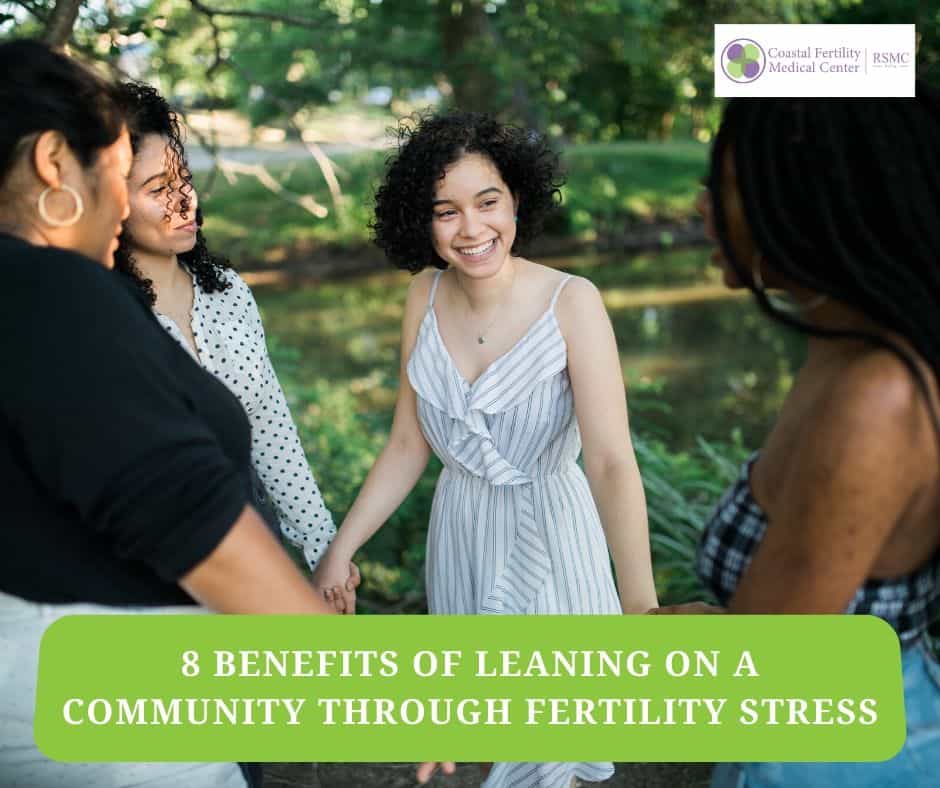
We are usually told to lean on our spouses when dealing with fertility stress. However, we can get a strong sense of support from people who dealt with infertility and know where the shoe pinches when it comes to the fertility process with all its headaches. Most times, our partners can’t fully comprehend what we are going through, and when they don’t, we need to have a cadre of people who do. The ups and downs of the family building journey require that you have a community – people to turn – when in need of compassion. It is not advisable to deal with all the stress by yourself. Having a supportive community or an expert fertility doctor to lean on while undergoing reproductive health stress during the fertility process can be a potent salve.
When facing reproductive health stress and uncertainty, it is essential to remember that you are not alone. According to the Centers for Disease Control and Prevention (CDC), 1 out of every 10 American women between the ages of 15 and 44 have trouble getting or staying pregnant. Also, an estimated 5 million US women have PCOS (polycystic ovary syndrome), and 10 in every 100 women have been diagnosed with endometriosis. The number gets larger if we mention of non-binary people, transgender men, and other ovary and uterus-owning folx who may have a wide range of stressful and discouraging reproductive health outcomes.
You are not the only one to feel stressed and overwhelmed by your fertility and reproductive health. So, look for “your people” have trust in them. Let them support and motivate you as you navigate your infertility or any other reproductive issues. A community of people who know exactly what you are passing through can assist you in these ways and for these reasons:
A community offers validation.
There is some sort of validation that we feel when we hear others’ stories, especially if their stories are like our own. It makes us feel like we are not alone. It is one thing to “hear” that you are not alone, but it is a different thing to feel less alone by witnessing another person’s vulnerability. Through it, we can feel motivated, hopeful, or, in some sense, comforted.
A community means that you don’t need to entirely rely on your partner in the fertility process.
Spouses tend to have different physical experiences during the fertility process. Therefore, it’s important that you have other friends, relatives, a community, or a therapist to talk to in an effort to feel understood. Talking to people other than one’s partner can be very helpful. Remember that your partners may also have a lot going on in their life and may not know much about pregnancy and fertility. It is important to speak with people who understand and have similar concerns.
Reproductive health stress can impact relationships in many ways, sometimes changing into resentment, communication issues, or emotional distance. Having extra outlets to vent your grievances or worries can open the way for better conversations with your partners. There are plenty of Support & advice forums with advice from fertility doctor(s) as well as other people that struggle with infertility.
A community can provide real, genuine empathy.
A supportive community will bring about feelings of connection and bi-directional empathy. This community can hold your worries, sadness, and complexity and won’t make you feel inadequate, competitive, insecure, or threatened. These negative feelings are the direct opposite of a true and healthy connection.
A community eliminates stigma related to reproductive health.
Surrounding ourselves with supportive people who understand what we are going through, we help shift the cultural stigma around fertility health issues. While conversations are usually about endometriosis, PCOS, and infertility, and the messiness of trying to get pregnant, a lot of work still needs to be done before these discussions can occur in public places without the added weight of judgment or shame.
A community safeguards your mental health.
If you have diagnosed with cancer, reaching out to other people who are battling the same condition can help you maintain your mental health. Studies have shown that feeling alone can have a negative impact on both your physical and mental health. According to research conducted in 2013, loneliness can increase the levels of stress and hormones in the body. As a result, it raises the risk of severe health issues, such as dementia and heart disease.
A community offers inclusivity.
Especially for the LGBTQ+ community, who constantly have to deal with issues of fertility and reproductive health while also being segregated from the larger, cultural narrative – a supportive community of other LGBTQ+ people going through the same stressors is very important. There is so much information out there for the LGBTQ community. However, it is still much more difficult for them to build a family, unlike heterosexual couples.
A community can give you new information.
Before going for any additional treatment or attempting any at-home “remedy,” it is always good to discuss your reproductive health options with a fertility doctor. However, a community of people experiencing the same thing you’re going through can provide you with information. It is something that you can only get from people who have “been there and done that.” Knowing that you are not the only person dealing with infertility issues can be so relieving and offer support to your journey ahead. Even if you are just lurking and reading the stories of other people, it is comforting to know what others are experiencing.
A community won’t shame, rush, or judge you.
A community of supportive people is less likely to judge you or ask you invasive questions. But instead, they make you feel supported, understood, and listened to on your infertility journey. As you navigate reproductive issues and infertility, it will be beneficial to surround yourself with people who are reflective, honest, thoughtful, and excellent communicators. If you also struggle with infertility issues, want to know more about how having a community can help? or how an expert fertility doctor can help? or have any further questions regarding your fertility? you can schedule a consultation, or you can always visit us at CoastalFertility.com to get more info on reproductive health, infertility, and our fertility doctors.
Julianna Nikolic
Chief Strategy Officer Julianna Nikolic leads strategic initiatives, focusing on growth, innovation, and patient-centered solutions in the reproductive sciences sector. With 26+ years of management experience and a strong entrepreneurial background, she brings deep expertise to advancing reproductive healthcare.



 Make a Payment